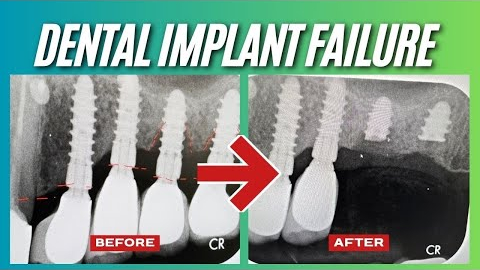
Dental bridges are a common solution for replacing missing teeth, but over time, they can fail, especially when decay develops underneath the supporting teeth or the surrounding bone begins to shrink.
For many patients in Poway, CA, a failing bridge is often the first sign that a more long-term solution is needed. When bone loss is also present, replacing a bridge with dental implants requires careful planning and advanced treatment techniques.
Watch: Learn how failing bridges and bone loss can be treated with dental implants and bone grafting.
Why Dental Bridges Can Fail Over Time
Dental bridges rely on the health of the teeth that support them. If those teeth develop decay, fracture, or weaken over time, the entire restoration can become compromised.
Additionally, bridges can make cleaning more difficult. This can increase the risk of plaque buildup and further damage to the surrounding teeth and gums.
Because of these limitations, many patients choose to replace failing bridges with dental implants, which function independently and are easier to maintain long-term.
The Challenge: Bone Loss After Long-Term Tooth Replacement
Bone loss is a common issue when teeth have been missing for an extended period of time or when a bridge has been in place for many years.
When bone volume decreases:
- The jaw may become too thin to support implants
- The natural shape of the ridge can be lost
- Implant placement becomes more complex
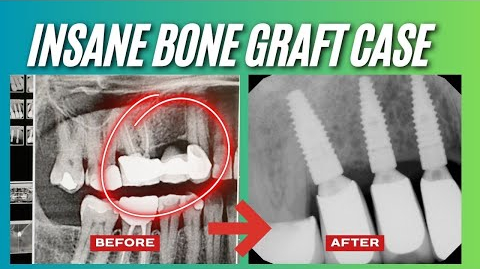
In these cases, rebuilding the foundation with bone grafting is often necessary before or during implant placement.
Treatment Options: Staged vs. Simultaneous Approach
There are two main approaches to placing dental implants when bone loss is present.
Staged Approach
- Bone grafting is performed first
- Healing occurs over several months
- Implants are placed once the bone is stable
Simultaneous Approach
- Implants and bone grafting are performed at the same time
- Reduces total treatment time
- Depends on anatomy and available bone support
Both approaches can be highly effective. The right option depends on the amount of bone loss and the overall treatment goals.
Advanced Bone Reconstruction Techniques
Modern periodontal care offers several techniques to rebuild bone and support implants.
Ridge Augmentation
When the outer portion of the jaw is too thin, bone can be added to restore width and create a stable foundation.
Autogenous Bone Grafting
Using the patient’s own bone can improve healing and integration. This bone can be shaped and used to rebuild areas where support is lacking.
Sinus Lift Procedures
In the upper jaw, bone height may be limited by the sinus cavity. A sinus lift creates additional space so implants can be placed safely.
These techniques are often part of advanced surgical periodontal treatments and can be combined depending on the case.
Why Bone Grafting Success Depends on Technique
Successful bone regeneration depends on more than just the materials used.
Key factors include:
- Stable placement of graft material
- Adequate blood supply for healing
- Proper integration with the surrounding bone
Bone particles (often called bone chips) are commonly used to fill gaps and support new bone formation, playing an important role in long-term success.
The Importance of Soft Tissue Healing
Even with ideal bone reconstruction, healing of the gums is critical.
The surgical site must:
- Be fully covered by healthy tissue
- Heal without tension
- Remain protected during early recovery
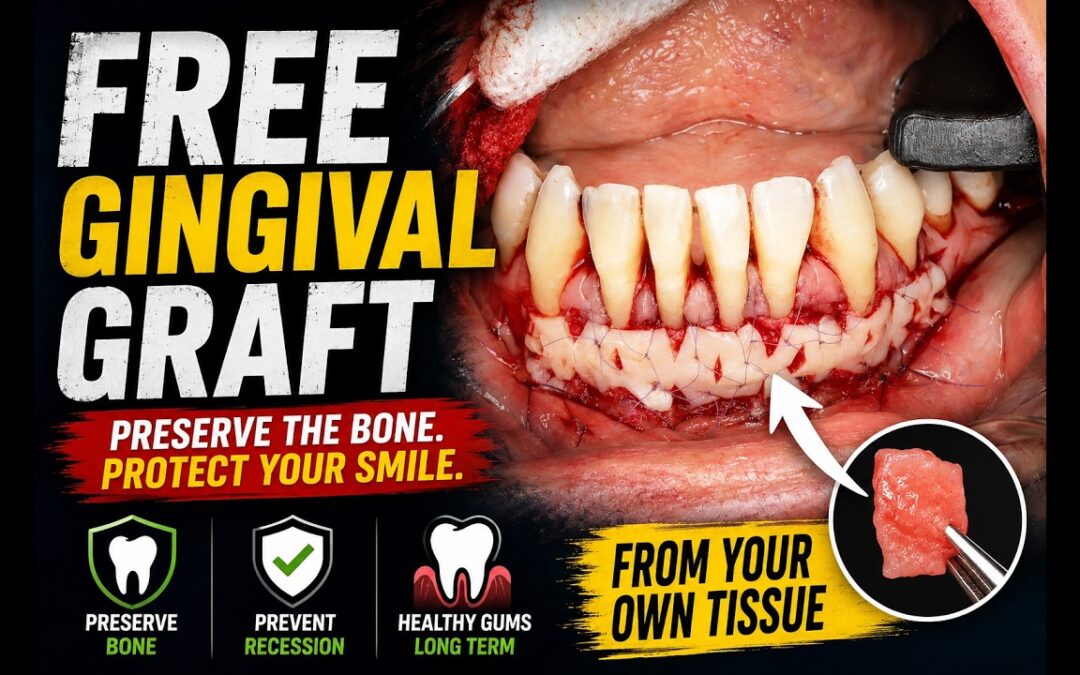
If the area reopens too soon, it can expose the graft and affect the outcome. This is why careful surgical technique and follow-up care are essential.
Ongoing periodontal maintenance also plays an important role in protecting implants after treatment.
Dental Implants After a Failing Bridge in Poway, CA
For patients in Poway and nearby areas like Rancho Bernardo, Scripps Ranch, and Escondido, a failing bridge does not mean you’re out of options.
At Poway Perio, advanced techniques like ridge augmentation, bone grafting, and guided implant placement are used to restore both function and long-term stability—even in cases with significant bone loss.
Patients can also explore real outcomes on the before-and-after dental implant page to better understand potential results.
If you’ve been told you don’t have enough bone or are dealing with a failing bridge, you can schedule a consultation to explore your options.
FAQs: Dental Implants with Bone Grafting
Can I get dental implants if I have bone loss?
Yes. Many patients qualify for implants with procedures like bone grafting, which helps rebuild the foundation needed for long-term success.
What is a sinus lift?
A sinus lift is a procedure that creates space for implants in the upper jaw by lifting the sinus and adding bone material. This is often done alongside dental implant treatment in areas with limited bone.
Is it safe to place implants near the sinus?
Yes, when properly planned using advanced imaging and guided techniques. Learn more about safe placement on the dental implants page.
Can bone grafting and implants be done at the same time?
In some cases, yes. When conditions allow, combining procedures can reduce treatment time and improve efficiency. This approach is part of advanced surgical periodontal treatments.
How long does healing take after bone grafting?
Healing can take several months, depending on the procedure. You can also review general recovery expectations in healing after gum grafting tips for recovery.
What type of bone is used for grafting?
Often, your own bone (autogenous bone) is used because it promotes strong healing. Other materials may also be used depending on the case and are explained in bone grafting for dental implants.
What happens if I don’t rebuild bone before implants?
Without enough bone support, implants may fail over time. That’s why proper planning and procedures like bone grafting are important.
Is recovery from bone grafting difficult?
Most patients experience manageable discomfort and recover well with proper care. Ongoing support like periodontal maintenance also helps protect results.
Why is soft tissue closure important?
Proper gum closure protects the graft and prevents complications during healing. This is a key part of successful gum disease and periodontal treatment.
Where can I get dental implants with bone grafting in Poway?
You can schedule a consultation or contact Poway Perio to explore your treatment options.